
 By
By 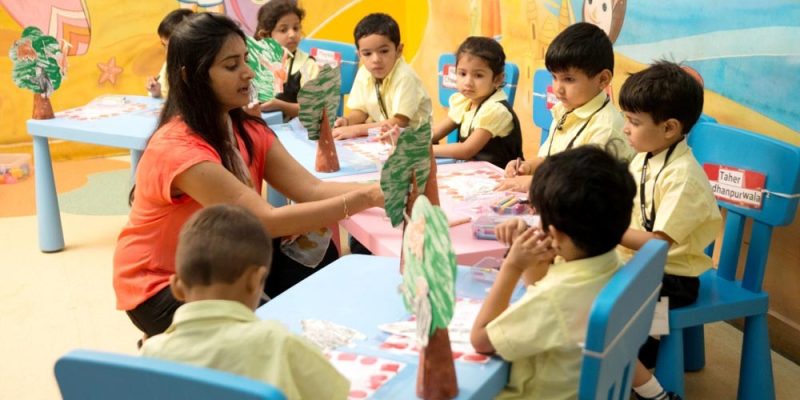
Nagpur is fast emerging as one of India’s most education-focused cities, balancing its traditional roots with a modern outlook. Over the last decade, the city’s educational journey has evolved remarkably from cosy kindergartens tucked in residential neighbourhoods to expansive campuses offering world-class facilities. Parents in Nagpur today have access to a range of institutions designed to nurture young minds from their very first classroom experience.
The city’s education sector thrives on diversity ranging from neighbourhood Montessori schools to globally aligned academic setups. Parents now seek a higher secondary school in Nagpur that fosters creativity, global awareness, and emotional intelligence in equal measure. As education in Nagpur evolves, it is setting a strong foundation for children who will one day become leaders, innovators, and changemakers on a national and international level.
The New Face of Early Learning
Kindergarten in Nagpur is no longer limited to colourful walls and nursery rhymes. Schools now emphasise holistic learning, where emotional intelligence, communication skills, and creativity develop alongside basic literacy. Teachers are adopting child-centred pedagogies that promote curiosity rather than rote memorisation. Small classroom sizes are preferred to provide individualised attention.
Play-based learning is gaining popularity, especially in pre-primary sections. Students learn the alphabet through storytelling, understand numbers with manipulatives, and express their imagination through art and drama. Such approaches align well with early childhood education research, which highlights that children retain information best when lessons are experiential and fun.
The Transition to Primary Education
The transition from kindergarten to primary school in Nagpur is often the first major milestone for a child. It sets the tone for their academic foundation. Parents look for schools that balance academics with extracurricular exposure where sports, yoga, and life skills are part of the daily routine.
A growing number of schools offer a blend of traditional Indian learning values with international standards. For example, international CBSE schools in Nagpur often include global teaching methodologies while retaining cultural subjects like Indian languages and moral science. This dual approach encourages children to think universally while staying rooted in their own identity.
Why Nagpur Parents Are Becoming More Selective
In the past, families in Nagpur often chose schools based on proximity or reputation. Now, the selection process is far more nuanced. Parents assess safety measures, digital learning infrastructure, teacher qualifications, and even sustainability practices before securing private school admission in Nagpur.
Schools that provide dedicated mentorship programs, transparent communication channels with parents, and continuous evaluation systems are in high demand. Such expectations have encouraged institutions to innovate both academically and administratively.
Teaching Methods that Inspire
Educators in Nagpur are increasingly moving away from one-size-fits-all teaching models. Lessons are now tailored to accommodate different learning speeds and styles. Many primary schools use activity corners, audio-visual lessons, and robotics labs even for the youngest learners.
Assessment patterns have also shifted. Instead of assigning heavy textbooks and rote tests, schools conduct theme-based projects and competency-driven evaluations. This fosters analytical thinking early on and helps children apply concepts in real-life contexts.
Here’s a quick look at the emerging teaching trends across Nagpur’s early and primary education sector:
|
Teaching Approach |
Description |
Key Benefit for Students |
|---|---|---|
|
Play-based Learning |
Focuses on games, art, and stories |
Builds social and emotional intelligence |
|
Inquiry-based Learning |
Encourages asking questions and problem-solving |
Develops curiosity and decision-making |
|
Experiential Education |
Hands-on learning through experiments |
Improves conceptual understanding |
|
Blended Learning |
Combines digital tools with physical classrooms |
Prepares kids for tech-driven future |
|
Multilingual Learning |
Promotes English, Hindi, and regional languages |
Enhances cognitive flexibility |
The Role of Infrastructure and Facilities
Modern early education in Nagpur isn’t just about textbooks and teachers-it’s about creating an environment that stimulates discovery. Child-friendly furniture, spacious classrooms, and interactive play zones are now common features. Some schools even integrate mini-gardens and kitchen gardens to teach basic environmental awareness.
With rising competition, international CBSE schools are also focusing on specialised spaces like STEAM labs (Science, Technology, Engineering, Art, and Mathematics) and sensory development areas. These feature-rich environments motivate children to explore beyond curricular boundaries.
Technology integration has become a hallmark as well. Smart classrooms, tablets, and interactive screens are now standard tools not luxuries. Teachers use these to visualise concepts in real time, ensuring that learning feels more like exploration than instruction.
Private School Admissions: A Strategic Decision
Parents seeking private school admission in Nagpur face both opportunities and challenges. On one hand, Nagpur offers a diverse range of private institutions from Montessori-inspired schools to CBSE-affiliated academies with global recognition. On the other hand, competition for spots in reputed schools remains high. Admission procedures typically include interaction rounds with parents, observation sessions for kids, and an evaluation of readiness rather than rote knowledge.
Schools have also become more transparent in their admission processes. Many now host open house sessions and digital orientations to help parents make informed decisions. The emphasis is shifting from standardised grades to understanding a child’s overall personality and learning temperament.
The Broader Ecosystem: Influencing Later Education
What starts at the kindergarten and primary level often reflects in later schooling years. A strong foundation of communication, creativity, and conceptual clarity empowers students when they progress to higher grades. It also influences how smoothly they adapt to a higher secondary school in Nagpur later in life.
For example, a child who developed inquiry-based learning habits in primary school will likely excel in critical subjects like physics, mathematics, and computer science at the higher secondary school in Nagpur. These skills also help them crack competitive exams or pursue artistic fields without relying solely on rote preparation.
Emphasis on Teacher Development
No educational reform succeeds without focusing on teachers. Early education in Nagpur has seen a surge in specialised teacher training programs aimed at upskilling educators in classroom management, emotional development, and neuro-linguistic teaching. Regular workshops and peer-learning sessions help teachers exchange ideas and adapt to evolving student needs.
Teacher-student ratio improvements also reflect a growing commitment toward personalised learning. Schools with balanced ratios enable teachers to identify unique student strengths and address challenges early on. This responsiveness enhances both academic performance and emotional well-being.
Challenges and Emerging Opportunities
While Nagpur’s education scene has made significant progress, certain challenges persist. Affordability remains a barrier for some families, limiting access to high-quality schooling. Additionally, constant dependency on digital resources can cause screen fatigue among younger children.
However, opportunities continue to expand. Government initiatives promoting foundational literacy, corporate sponsorships for educational programs, and collaborations between Indian and international educators are transforming the city into a dynamic learning hub. Nagpur’s schools are not only building students’ academic futures but also shaping the ethics and empathy of its next generation.
The Way Forward
Early education in Nagpur stands at a promising turning point-one that blends creativity, culture, and technology. Schools are evolving from mere instruction centres into vibrant learning ecosystems. As more parents seek holistic experiences for their children, and as private players introduce global innovations, Nagpur continues to redefine what quality education means in an Indian context.
From the curiosity sparked in kindergarten to the confidence built in primary classes, every stage prepares young learners for a bright academic future. The city’s emphasis on nurturing balanced, skilled, and socially aware individuals will ensure that the classrooms of today become the launchpads of tomorrow’s achievers.
——————————————————————————————————————








Comments