
 By
By 
“Not worth a continental” is not just an old expression. It is a description of one of the war’s genuine near-disasters
Key Takeaways
- The Continental Congress began issuing paper currency, called Continentals, in 1775 to fund the war effort, but it had no reliable tax base to back the money’s value.
- Confidence in the currency began eroding by mid-1776, and by 1779 it had depreciated to pennies on the dollar with inflation near 50 percent, the origin of the phrase “not worth a continental.”
- By mid-1781, Continentals had effectively stopped circulating as usable currency altogether.
- The war was actually financed through a patchwork of foreign loans from France and other European powers, domestic debt, state requisitions, and eventually Robert Morris’s personal credit, not primarily through the failed currency itself.
- Robert Morris, appointed Superintendent of Finance in 1781, issued personal promissory notes and pursued financial reforms that helped stabilize the war effort after the currency had already collapsed.
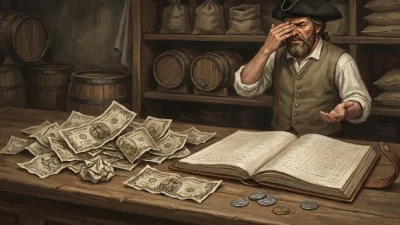
The Continental Dollar’s failure is famous enough to have left behind a phrase still in casual use two and a half centuries later: calling something “not worth a Continental” means it is worthless. What gets left out of that punchline is how close the currency’s collapse came to genuinely undermining the war effort, and the improvised, often personal financial maneuvering that kept the Revolution funded once the paper money everyone had been counting on stopped being worth anything at all.
Did the Continental Dollar Actually Fail? The Quick Answer
Yes, unambiguously. The Continental Congress’s paper currency lost the overwhelming majority of its value between 1775 and 1781, effectively ceasing to function as usable money by mid-1781, and the phrase “not worth a continental” is a direct historical reference to just how total that collapse was, not an exaggeration.
What the phrase does not capture is that the war did not end when the currency did. Independence was won despite the Continental’s failure, financed through other, less mythologized means.
Why Congress Printed Money It Could Not Back
The Continental Congress began issuing paper currency by mid-1775 because it had no other quick way to fund an army, and critically, it had no power to levy taxes directly on the colonies to back that money with real revenue. As economist and historian James Madison later observed, a currency’s value depends on confidence in the issuing government’s credit, not simply on how much of it exists, and Congress had neither a reliable tax base nor a swift route to ending the war to inspire that confidence.
This was a structural problem, not a simple case of mismanagement. Congress needed money immediately and had almost no legitimate mechanism to raise it besides printing more of it.
EVIDENCE CHECK: It is tempting to treat the Continental’s collapse as evidence of incompetence. The more accurate read is that Congress was operating with essentially no tax authority and no central bank, printing currency because it had few realistic alternatives, not because it failed to understand the risk.
The Collapse: From Full Value to “Not Worth a Continental”
Confidence in the Continental began eroding as early as mid-1776, but the currency’s value held on in diminished form for several more years before truly collapsing. By 1779, the Continental had depreciated to pennies on the dollar, with inflation reaching nearly 50 percent, which is the specific period that produced the phrase still used today. By mid-1781, Continentals had effectively stopped circulating as functional currency at all.
A currency collapsed so completely it left behind an insult that outlived the money itself.
That collapse happened during the middle years of a war the Continental Army still had to fight and supply, which makes the timing genuinely dangerous rather than a late-stage footnote.
What Actually Paid for the War, If Not the Currency
Once the Continental Dollar’s value evaporated, the war effort was sustained through a combination of foreign loans, primarily from France, along with support from the Netherlands and Spain; domestic debt owed to individual creditors and states; and direct requisitions Congress requested from state governments, none of which were a clean or fully reliable substitute. France’s financial and military support in particular was decisive to the Continental Army’s ability to keep fighting once domestic currency had stopped functioning as a dependable resource.
This patchwork approach was not an elegant solution. It was a series of stopgap measures that, collectively, kept the war funded through its most financially precarious years.
Robert Morris and the Improvised Rescue
Appointed Superintendent of Finance in 1781, Robert Morris confronted a government that could not compel states to pay their share of the war’s costs and a currency that had already lost the public’s trust. Rather than waiting for a structural fix, Morris began issuing personal promissory notes, commonly called Morris notes, using his own financial credibility to pay for supplies and operations the government’s own currency could no longer reliably purchase.
Morris also pushed for a national bank, and while Congress was slow to embrace his more ambitious proposals during the war itself, his emphasis on centralized financial credibility influenced the postwar reforms, including the eventual chartering of the Bank of North America and, later, Alexander Hamilton’s financial system.
The debt didn’t disappear; it moved.
Financing the war through loans and improvised credit rather than a stable currency meant the Revolution ended with substantial outstanding debt, owed both to foreign governments and to domestic creditors who had accepted increasingly shaky paper along the way. That debt became one of the new nation’s first major governing challenges, and the arguments over how, and whether, to honor it fully shaped the financial policy fights of the following decade, including Alexander Hamilton’s later push for the federal government to assume state war debts.
In other words, the Continental’s collapse did not just create a temporary wartime crisis. It set the terms for a financial reckoning that continued well past the war’s official end.
What “Bankrupt” Gets Wrong About How the War Was Won
Calling the Continental Dollar’s collapse a “bankruptcy” of the Revolution implies the war effort itself failed financially, when in fact the war was won using entirely different financial tools than the ones that collapsed. The currency failed. The broader financing strategy, messy, improvised, and dependent on foreign support and individual initiative like Morris’s, ultimately held together long enough to see the war through.
That distinction matters. It replaces a simple story of financial failure with a more accurate picture of a government adapting, awkwardly and under enormous pressure, to a funding crisis it had largely created for itself out of necessity.
Why It Still Matters
The Continental Dollar’s collapse is a genuinely instructive case study in what happens when a government issues currency without the tax authority or credibility to back it, a dynamic that shows up repeatedly in later financial history well beyond the Revolution. It is also a reminder that the war’s outcome depended on more than battlefield victories: it depended on a chaotic, improvised financial system holding together just long enough.
Understanding how close that system came to failing, and what specifically replaced the currency once it did, gives a fuller picture of how independence was actually achieved, not just where it was fought.
FAQ
Did the Continental Dollar really become worthless? Yes. By 1779 it had depreciated to pennies on the dollar with inflation near 50 percent, and by mid-1781 it had effectively stopped functioning as usable currency, which is the direct origin of the phrase “not worth a continental.”
Why didn’t Congress just back the currency with taxes? The Continental Congress had no power to levy taxes directly on the colonies or states. Without a reliable revenue source or a fast path to ending the war, it had few realistic alternatives to printing paper currency to fund the army.
If the currency failed, how was the war actually paid for? The war was funded through a combination of foreign loans, especially from France, along with the Netherlands and Spain, domestic debt, requisitions from state governments, and eventually Robert Morris’s personal financial credit and reforms.
Who was Robert Morris? Robert Morris was appointed Superintendent of Finance in 1781. He issued personal promissory notes known as Morris notes to fund operations after the Continental currency had collapsed, and he pushed for financial reforms that influenced the later Bank of North America.
Did the currency’s collapse mean the revolution failed financially? No. The currency failed, but the broader war effort was financed through other means and ultimately succeeded. The collapse was a serious crisis, not the end of the story.
Further Listening & Reading
For more on the less-taught dimensions of how the Revolution was actually fought and financed, explore the AAR interview series and the Themes of the American Revolution collection. Our related piece on 1776: Seven Months That Changed America covers the same early period when Congress first turned to paper currency out of necessity.










Comments