
 By
By 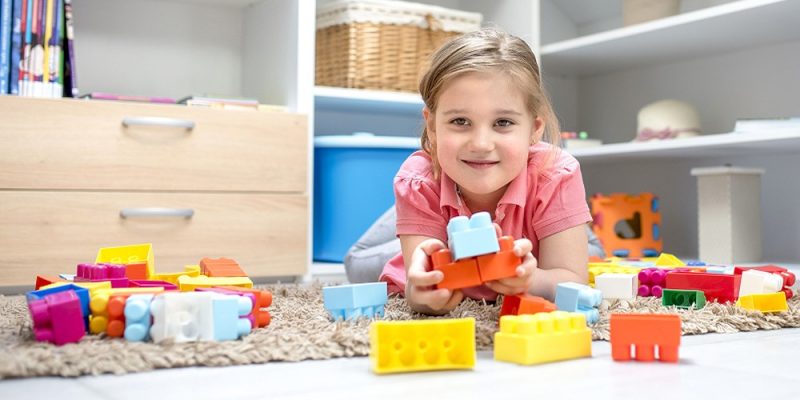
Key Takeaways
- Three-year-olds develop early logic skills through hands-on activities rather than digital screens.
- Structured play in a nursery school setting builds reasoning, sequencing, and problem-solving abilities.
- Teachers guide children through puzzles, pattern recognition, and cause-and-effect exploration.
- Daily routines and group tasks help children practise decision-making and logical thinking.
- Many educators believe screen-free environments are a defining trait of the best preschools.
Introduction
Walk into a classroom for three-year-olds and you will not see laptops, tablets, or digital games. Instead, you will see blocks scattered across tables, puzzle boards laid out on the floor, and children carefully sorting coloured beads into bowls. While these activities may appear simple, they form the foundation of logical thinking. After all, at this stage of development, children learn best through physical interaction with objects, guided conversations, and repeated experimentation. A well-structured nursery school programme uses these everyday classroom moments to introduce early reasoning skills long before formal mathematics or science lessons begin.
Parents sometimes assume that logic requires technology or structured worksheets, but early childhood educators approach it differently. Amidst many programmes recognised as the best preschool in Singapore, teachers deliberately design screen-free activities that challenge children to observe patterns, test ideas, and solve small problems independently. The result is a learning environment where logic emerges naturally through play.
Sorting, Matching, and Classification Activities
One of the earliest ways children practise logical thinking is through classification. Teachers introduce sorting activities using blocks, buttons, shells, or picture cards. Children are asked to group objects by colour, shape, size, or type. It looks like a simple tidy-up exercise at first glance, but it actually requires children to identify shared characteristics and make consistent decisions.
For example, a teacher might place red, blue, and yellow beads on a table and ask the children to organise them into separate bowls. Once a child hesitates, the teacher asks guiding questions such as “What do these two beads have in common?” or “Where would this one belong?” These prompts help the child understand categorisation, which is an important logical skill that later supports mathematics and reading comprehension.
Programmes often expand this activity gradually. Children may be asked to sort objects by two characteristics at once, such as colour and size. These small cognitive challenges encourage children to evaluate options and make reasoned choices without relying on screens or automated feedback.
Puzzle Solving and Pattern Recognition
Puzzles are another effective tool used in early childhood classrooms. Wooden puzzles, shape boards, and pattern blocks are intentionally selected to strengthen spatial reasoning and problem-solving skills. Children learn that certain shapes fit together in predictable ways, and they begin to recognise patterns through repetition.
Teachers encourage children to experiment rather than immediately correcting mistakes. A child may rotate a puzzle piece several times before finding the correct orientation. Through this process, the child learns persistence, prediction, and cause-and-effect relationships. These are core elements of logical thinking.
Many educators working in the best preschools emphasise open-ended puzzles rather than single-solution tasks. Pattern blocks, for instance, allow children to create symmetrical shapes, repeating sequences, or simple mosaics. These activities quietly introduce mathematical logic without presenting it as a formal lesson.
Logical Thinking Through Storytelling and Conversation
Language also plays an important role in developing logic. Teachers frequently ask children to explain their decisions, predict outcomes, or describe what might happen next in a story. Amidst a nursery school classroom, storytelling sessions often involve questions such as “Why do you think the character did that?” or “What do you think will happen next?”
These discussions train children to form connections between events. Once a child explains that a character slipped because the floor was wet, they are practising cause-and-effect reasoning. Over time, these conversations help children build structured thinking patterns.
Educators in the best preschools recognise that logical reasoning is closely linked to communication. Encouraging children to verbalise their thinking allows teachers to guide reasoning more effectively while helping children develop confidence in expressing ideas.
Everyday Routines That Strengthen Reasoning
Even daily routines contribute to logical development. Activities such as lining up, cleaning up toys, and preparing for snack time involve sequencing and organisation. Teachers may ask children to arrange steps in order: wash hands, collect a plate, then sit down at the table. These small routines reinforce structured thinking.
Children also participate in simple decision-making tasks. They may choose which activity station to visit first or decide how to build a structure with classmates. Such moments require children to evaluate options, predict outcomes, and adjust their actions.
Schools often recognised as the best preschools deliberately incorporate these routine decisions into the daily schedule. Rather than directing every action, teachers create opportunities for children to practise reasoning in practical situations.
Conclusion
Logic does not begin with computers or formal academic lessons. Logical thinking, for three-year-olds, develops through hands-on exploration, guided questions, and structured play. A thoughtfully designed nursery school environment uses puzzles, sorting activities, storytelling, and everyday routines to help children recognise patterns, understand cause and effect, and make independent decisions.
That said, by focusing on screen-free learning experiences, early childhood educators create conditions where reasoning grows naturally through curiosity and experimentation.
Curious how young children develop reasoning skills without screens? Contact Raffles Kidz International today.










Comments